News

CHART Congratulates Our Graduates!
Congratulations to CHART’s graduating students! Our center is grateful to have had an amazing team of graduate students supporting center research, community engagement, and pilot grant projects. We’re excited to keep a few of these students on our team over the summer and look forward to seeing all that they accomplish next!
Emily Wilhelm, MPH Environmental Health
CHART Research Core

“At CHART, I had the opportunity to engage with participants and support data collection through participant recruitment, surveying, and in-home environmental monitoring. Building on this work, my capstone project evaluated how heat and personal air pollution exposures vary across Metro Atlanta residents and their microenvironments using personal exposure and GPS data. This experience was especially meaningful given my interest in supporting vulnerable populations, including those with complex or often overlooked health conditions whose health can be significantly shaped by everyday environmental exposures. After graduation, I am excited to continue my work at CHART part-time this summer while seeking full-time opportunities in environmental health and data science.”
Natalia Swack, MPH Environmental Health & Epidemiology
CHART Research CORE
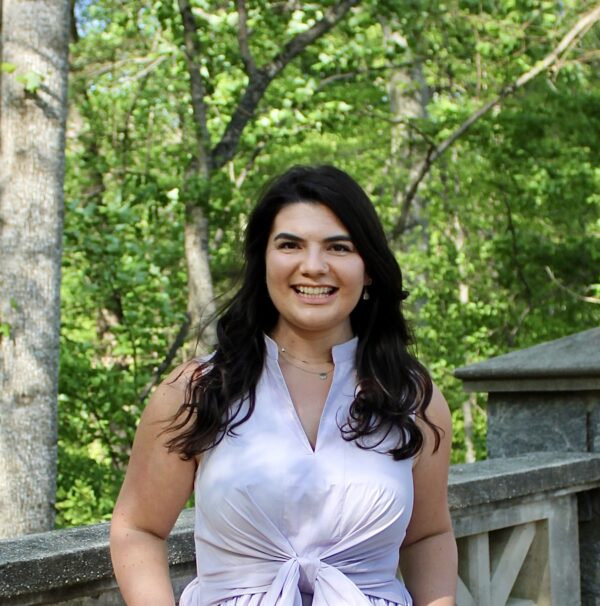
“For my master’s thesis, I looked at how both measured greenspace (NDVI) and how people perceive their surroundings related to heat-related illness in Atlanta. Even in areas with more greenery, people didn’t always feel like they had access to usable spaces. This summer, I’ll be continuing with Delta Air Lines, working on their Environmental Health & Industrial Hygiene team. After that, I’m planning to explore opportunities in the environmental and occupational health space.”
Ivanna de Anda, MPH Environmental Health & Epidemiology
CHART Research Core

“As an Environmental Epidemiology student focused on climate and health, I worked with two CHART studies supporting participant recruitment, collecting and processing environmental data from homes across the Atlanta metro area, mapping key findings, and developing a community-facing report. My thesis investigated drivers of microclimatic variability, examining how green space and built environment characteristics influence temperature and humidity extremes using high-resolution imagery and machine learning to characterize environments at both the home and neighborhood scale. After graduation, I will be heading to Portland, OR to pursue work in climate resilience planning and environmental data science.”
Ebony Coleman, EMPH Prevention Science
Former CHART Clinical Research Coordinator

“I formerly worked at Rollins as a clinical research coordinator on a project for heat related illness and emergency department visits. During the course of the project, I discovered a potential knowledge gap among patients regarding the risk of taking certain medications and heat exposure. I explored this topic as a thesis project. The research was very interesting to me and meaningful information was uncovered. As a student in the EMPH Prevention Science program, I’m excited to know the insight gained can be leveraged to educate patients on HRI prevention. ”
Trinity Walsh, MPH Environmental Health & Epidemiology
CHART Community Engagement Core

“In May 2025 I joined CHART’s Community Engagement Core (CEC) as a Graduate Research Assistant. Over the past year I have worked closely with my team and local organizations to collaborate on outreach and educational materials with communities impacted by rising temperatures. I’m not originally from Atlanta so I have really appreciated the opportunity to connect with neighbors and learn about their lived experience with heat and heat-related illness. Some of my favorite memories have been volunteering at the Atlanta Science Festival and attending Eco-Action’s student showcase. I was also able to complete my Applied Practice Experience (APE) with CHART! I’m now graduating with my MPH in Environmental Health & Epidemiology, and certificates in Climate & Health, and Complex Humanitarian Emergencies. I’m thrilled to be staying on with CHART for the summer and look forward to what the future holds!”
Sri Harsha Soma, MPH Global Epidemiology
CHART Pilot Project

“For my thesis, I examined whether the 2019 Brumadinho dam collapse in Minas Gerais, Brazil, one of the deadliest industrial disasters in the country’s history, contributed to a rise in arboviral infections like dengue, chikungunya, and Zika in surrounding municipalities. Using interrupted time series and controlled interrupted time series analyses, I compared monthly arboviral incidence data across two disaster-exposed municipalities (Betim, Brumadinho) and one unexposed control municipality (Santa Luzia) over seven years (2017-2023). The findings showed a dramatic immediate surge in arboviral incidence following the collapse, pointing to the role of environmental disruption in amplifying vector-borne disease transmission.
What made this work particularly compelling is that the disaster did not happen in a vacuum. Minas Gerais already carries one of the highest arboviral burdens in Brazil, shaped in part by rising temperatures and vegetation driven by climate change, conditions that independently favor mosquito survival and breeding. The dam’s collapse, along with the climate, may have made the situation worse. Working with Dr. Jessica Fairley helped me understand and think about the impact of a disaster in complex, real-world settings, and the confidence to pursue questions that sit at the intersection of environmental health, disaster epidemiology, and infectious disease. This research reinforced me that public health preparedness cannot treat industrial hazards and climate change as separate problems.”
Jasmine Hopkins, MPH Global Epidemiology
CHART Pilot Project

“My time as a student at the Rollins School of Public Health included me expanding my knowledge through the Global Environmental Health department and WASH certificate. I had the privilege of completing my APE in Accra, Ghana on food safety and hygiene and my ILE on identifying potential lead-contaminated water drinking sources across racial backgrounds. Outside of academics, I served as President of the student organization, WARP, where I encouraged students to engage with domestic and global WASH-related topics and hear from professionals in the Atlanta area. Most profoundly moved, I assisted Dr. Danielle Wallace as a Research Assistant with her CHART Pilot study exploring the influence of environmental exposures, like light and temperature, on sleep and brain health. I had first-hand experience in translating data into clear, approachable language by presenting information on chrono-health, the effects of melatonin, and the evolution of light exposure at Atlanta’s Science Festival. I also supported the team by co-developing report back summaries for participants, while coordinating data collection tools like survey instruments and codebooks.”