
News
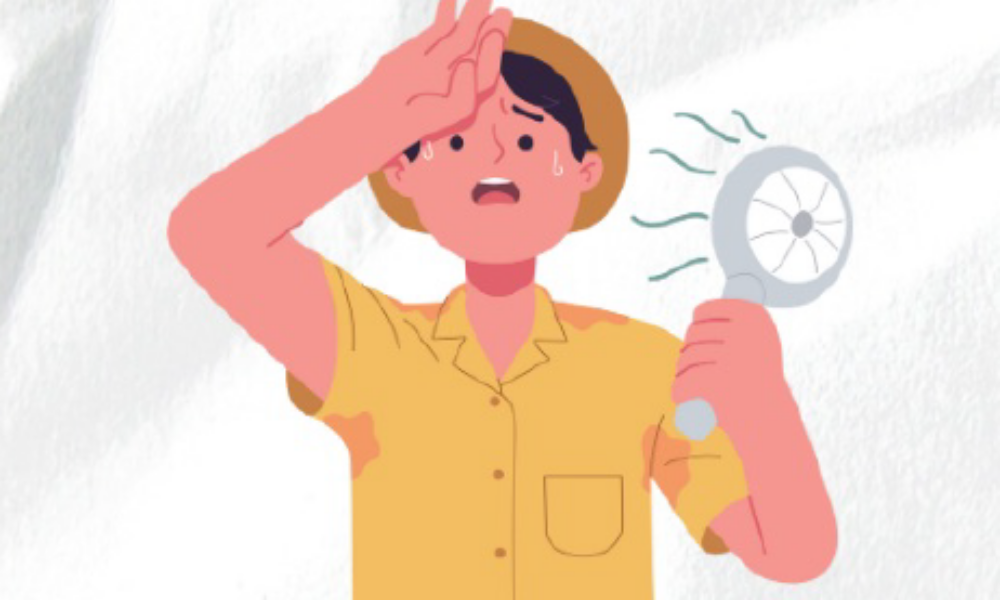
CHART Webinar Series – Heat and Emergency Department Visits: Findings from CHART’s Research Project Core
Heat and Emergency Department Visits: Findings from CHART’s Research Project Core
This webinar was held on March 31, 2026
Access the recording of the session HERE

Description: Heat waves, particularly in urban environments within cities, are increasing in frequency, intensity, and severity as summer temperatures continue to rise. Specific populations are particularly at risk. In CHART, we are identifying factors that affect health outcomes related to heat, particularly health conditions that affect heat-sensitivity as well as heat exposure pathways that can help inform mitigation and adaptation strategies. This webinar will highlight foundational and ongoing research on heat and emergency department (ED) visits that contribute to the CHART research project core
Objectives: By the end of this webinar, participants will be able to:
- Describe key requirements for investigating short-term heat-health associations in population-based studies
- Identify factors contributing to differential heat-health associations
- Recognize strengths and challenges that drive CHART’s research on heat and emergency department visits
Bios:
Stefanie Ebelt, ScD – Professor, Rollins School of Public Health
Dr. Stefanie Ebelt is a Professor of Environmental Health and Epidemiology at the Rollins School of Public Health at Emory University. Her research focuses on the intersection of ambient air quality, climate, and human health. Dr. Ebelt leads multiple large-scale, population-based studies investigating associations between air pollution, weather extremes, and acute morbidity. She also serves as Co-Lead of the Research Core for Emory University’s Climate and Health Actionable Research and Translation (CHART) Center.
Christine Ekenga, PhD, MPH – Assistant Professor, Rollins School of Public Health
Dr. Christine Ekenga is an Assistant Professor of Environmental Health at the Rollins School of Public Health of Emory University, with secondary appointments in the Departments of Behavioral, Social and Health Education Sciences and Epidemiology. She uses mixed methods approaches to investigate the contributions of environmental and occupational factors to human health and well-being, as well as the prevention and management of chronic diseases. Recent work has focused on the physical and mental health impacts of weather extremes.
*Continuing Nursing Education (CNE) Credits
This enduring material is eligible for Continuing Nursing Education (CNE) credits accredited by the Emory Nursing Professional Development Center (ENPDC). To receive 1.0 contact hour, please complete this evaluation after watching the webinar.
Please expect a wait time of at least 5-7 business days after completion of the survey for a follow-up email with proof of contact hours. For questions, please email sophia.lamb@emory.edu.
This webinar series is supported by the National Institute of Environmental Health Sciences of the National Institutes of Health under Award Number P20ES036110. The content is solely the responsibility of the authors and does not necessarily represent the official views of the National Institutes of Health.