News
CHART Pilot Grants – Updates From the Field
Assessing the combined effects of air pollution and climate change enhanced urban heat to the health of outdoor informal workers
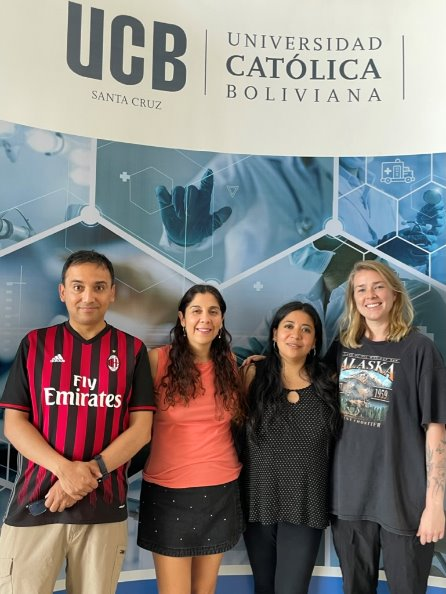
Dr. Olivia Ginn (UGA) and colleagues have been working in Bolivia on their pilot, “Assessing the combined effects of air pollution and climate change enhanced urban heat to the health of outdoor informal workers.” The aim of this study is to assess the potential health impacts on outdoor informal workers due to the combined effects of air pollution and urban heat in the context of climate change. The team has positioned low-cost air quality sensors in cities where outdoor informal workers conduct their activities to measure aerial concentrations of inhalable PM2.5 and is assessing its relationship with meteorological variables at representative locations.
At the intersection of extreme weather and the Brumadinho mining disaster: challenges of climate change in the face of other anthropogenic environmental threats
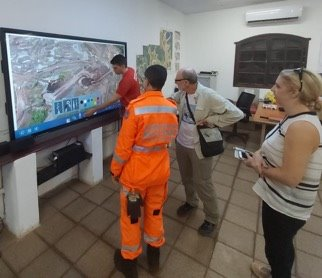
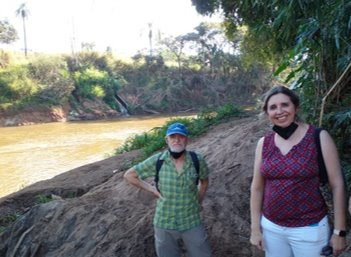
“Dr. Jessica Fairley (Emory SOM) reports good progress on the pilot project she leads, “At the intersection of extreme weather and the Brumadinho mining disaster: challenges of climate change in the face of other anthropogenic environmental threats.” The aim of the project is to describe incident arboviral cases (dengue, zika, and chikungunya) pre- and post-the 2019 mining disaster in the municipalities of Brumadinho and Betim, Brazil and compare temporal associations with extreme weather over the years 2017-2023. Preliminary findings suggest a significant increase in cases in Betim following the disaster, although this was not sustained. Climatic factors of temperature and precipitation were associated with arboviral cases. Across all municipalities, arboviral incidence (combined dengue, Zika, and chikungunya) displayed strong seasonal patterns, with peaks typically occurring between December and May and highest values around March–April. Belo Horizonte, the control municipality, showed relatively stable long‑term trends with clear annual cycles. Dr. José Ferreira, based out of the Unifenas University School of Medicine in Belo Horizonte, continues to work on the heavy metal testing protocol, and hopes to collect all the samples over the next 1-2 months.”
Tracking temperature exposures and monitoring physiology (Tracking TEMP)
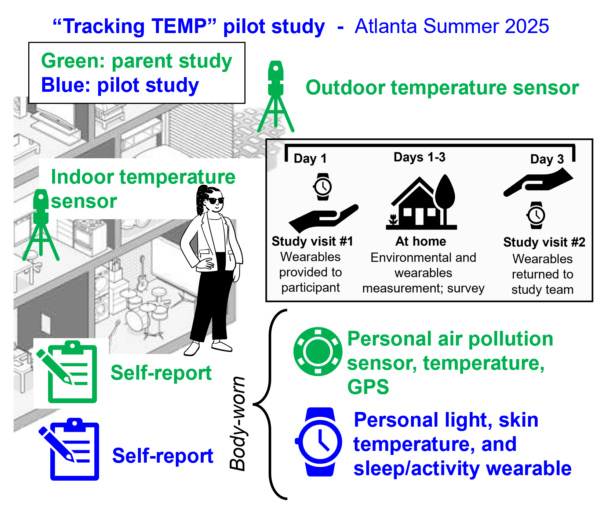
“In collaboration with Dr. Saikawa and Dr. Ebelt, Dr. Danielle Wallace (Emory RSPH) launched a pilot in Atlanta last summer entitled “Tracking temperature exposures and monitoring physiology (Tracking TEMP)”. The primary purpose of the project is to use wearables, environmental monitors, and survey data to test the hypothesis that warmer nighttime temperature exposure and higher nighttime heat index (temperature and humidity) are associated with impaired sleep health (e.g., markers of insomnia or sleep fragmentation) in real-world settings. Secondary analyses will examine the role of light exposure in these relationships. Sample collection ended August 2025. The team is currently processing and analyzing the data, as well as integrating data from the pilot study with data from the parent study (personal, indoor, and outdoor environmental measures). They have developed report-backs to communicate findings to study participants and, as they complete analyses, will present results to the scientific community and the general public.”
Extreme Temperatures and Health Risks in the Urban South
“Drs. Rebecca Larson (Augusta) and Cheryl Gaddis (Mercer) are in final preparations for the launch of their pilot project, “Extreme Temperatures and Health Risks in the Urban South”. The study will compare the heat vulnerability of residents of Macon, GA from historically under resourced neighborhoods with results of residents not living in those areas. The project also builds workforce-readiness skills for undergraduate public health students related research, community engagement, and extreme temperatures and health.”